Build a Free Portfolio Website for Remote Appointment Setters and Get Hired Faster

Introduction
The remote appointment setting field is growing fast. According to Zippia, the appointment setter job growth rate sits at 6% from 2018 to 2028, with about 32,900 new jobs projected over the next decade. That sounds like good news, right? But here is the catch.
Remote roles draw 2.5 times more applications than on site positions according to recent hiring data. So while more jobs exist, way more people are chasing them. That makes standing out harder than ever.
Many job seekers send the same resume and cover letter as everyone else. They blend in. And blending in does not land you the gig.
Here is the thing. A portfolio sets you apart fast.

It shows real proof of your skills instead of just telling someone you have them. A free portfolio website gives hiring managers something concrete to look at. They can see your communication style, your organization method, and how you handle real scenarios.
But most appointment setters skip this step. They do not realize that a simple online presence can be the deciding factor between two equally qualified candidates.
That is why this guide exists.
We will walk through exactly how to build a free portfolio website that showcases your skills and experience. No design experience needed. No expensive tools required. You can use resources like figma website design templates to create something professional looking without hiring a designer. And we will talk about why website speed optimization services matter for keeping potential employers engaged when they land on your page.
By the time you finish this guide, you will have a clear plan to create a portfolio that helps you stand out in the remote appointment setting space.
If you are new to this career path, you might want to check out our complete guide on how to become a remote appointment setter in 2026 first. It covers the basics of what this role involves and what skills you need to build.
Ready to get started? View our full collection of articles for more tips on building your remote career.
Why Remote Appointment Setters Need a Professional Portfolio
Here is the reality for 2026. Remote job postings get 2.5 times more applications than on site roles, according to Remote Hiring Statistics. That means for every single appointment setter job you apply to, dozens or even hundreds of other people are competing for the same spot. On top of that, only about 4% of new job postings are fully remote, as reported by Robert Half. So the competition is not just high, it is brutal.
Most applicants send the same generic resume and cover letter. They all look the same. So hiring managers have a hard time remembering anyone. That is where a portfolio changes everything.
A portfolio gives you a quick snapshot of what you can actually do.
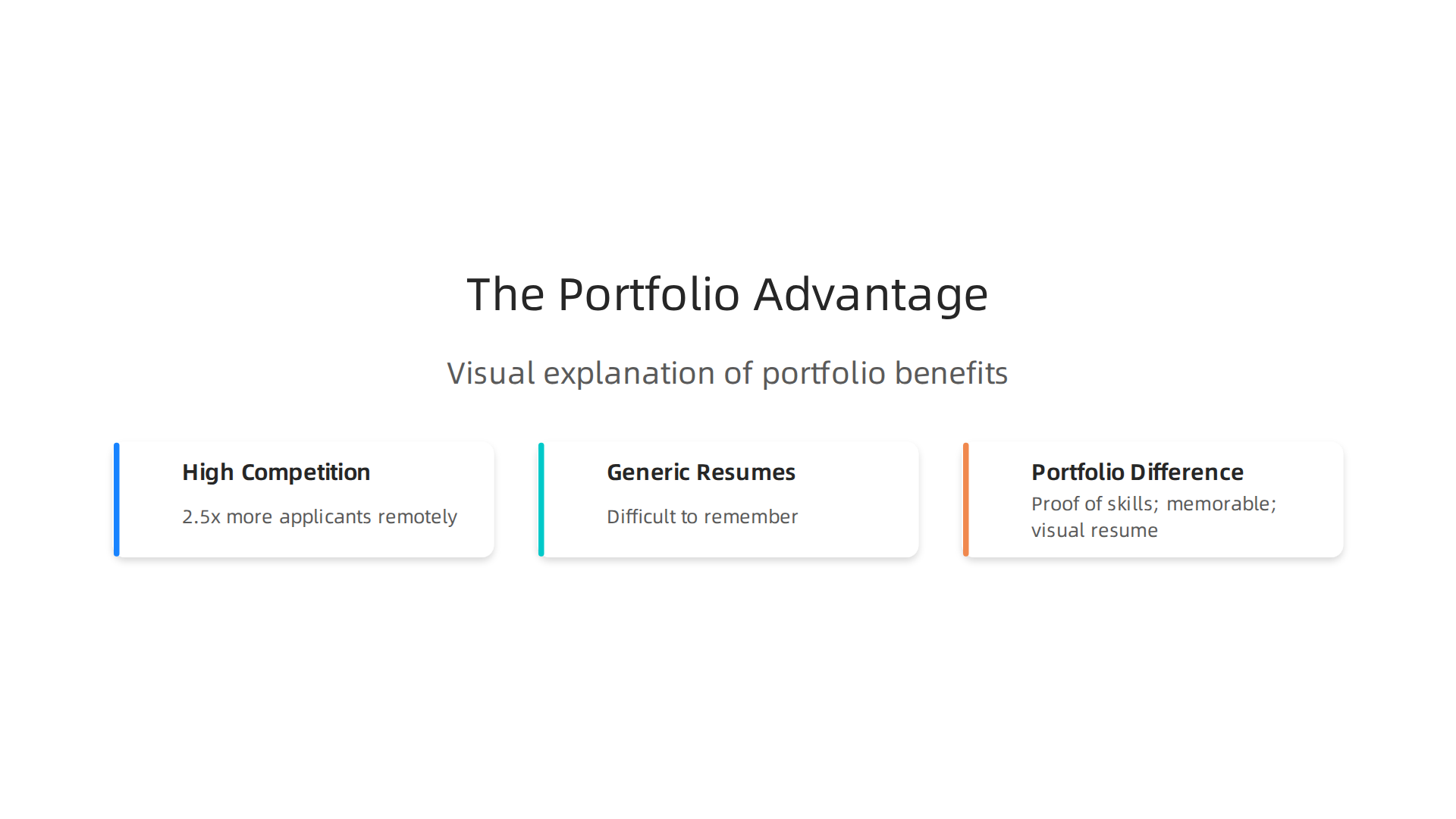
It shows real proof of your communication skills, your ability to stay organized, and your sales know how. Instead of just saying you are good at cold calling or lead follow up, you can show a sample call script, a calendar screenshot with booked appointments, or a simple case study of how you helped a previous client.
Think of it as your visual resume. It makes you memorable. In fact, a well crafted portfolio can even replace a cover letter and make your application stand out instantly.
The best part? You do not need to be a designer or spend money to build one. A free portfolio website is totally doable. You can use figma website design templates to create a professional look without hiring anyone. And once your site is live, do not forget about website speed optimization services. A slow loading page can make a busy hiring manager click away before they even see your work.
If you already know the basics of the appointment setter role, then building a portfolio is your next smart move. Check out our guide on why campaign website design matters for remote appointment setters to see how a well designed site boosts your credibility.
Want to dive deeper into making your application stand out? View Articles for more job search tips and proven strategies.
Key Elements of an Effective Appointment Setter Portfolio
So you are ready to build a portfolio. But what exactly goes inside it? You do not need to overcomplicate things. Just focus on three core elements that hiring managers actually care about.
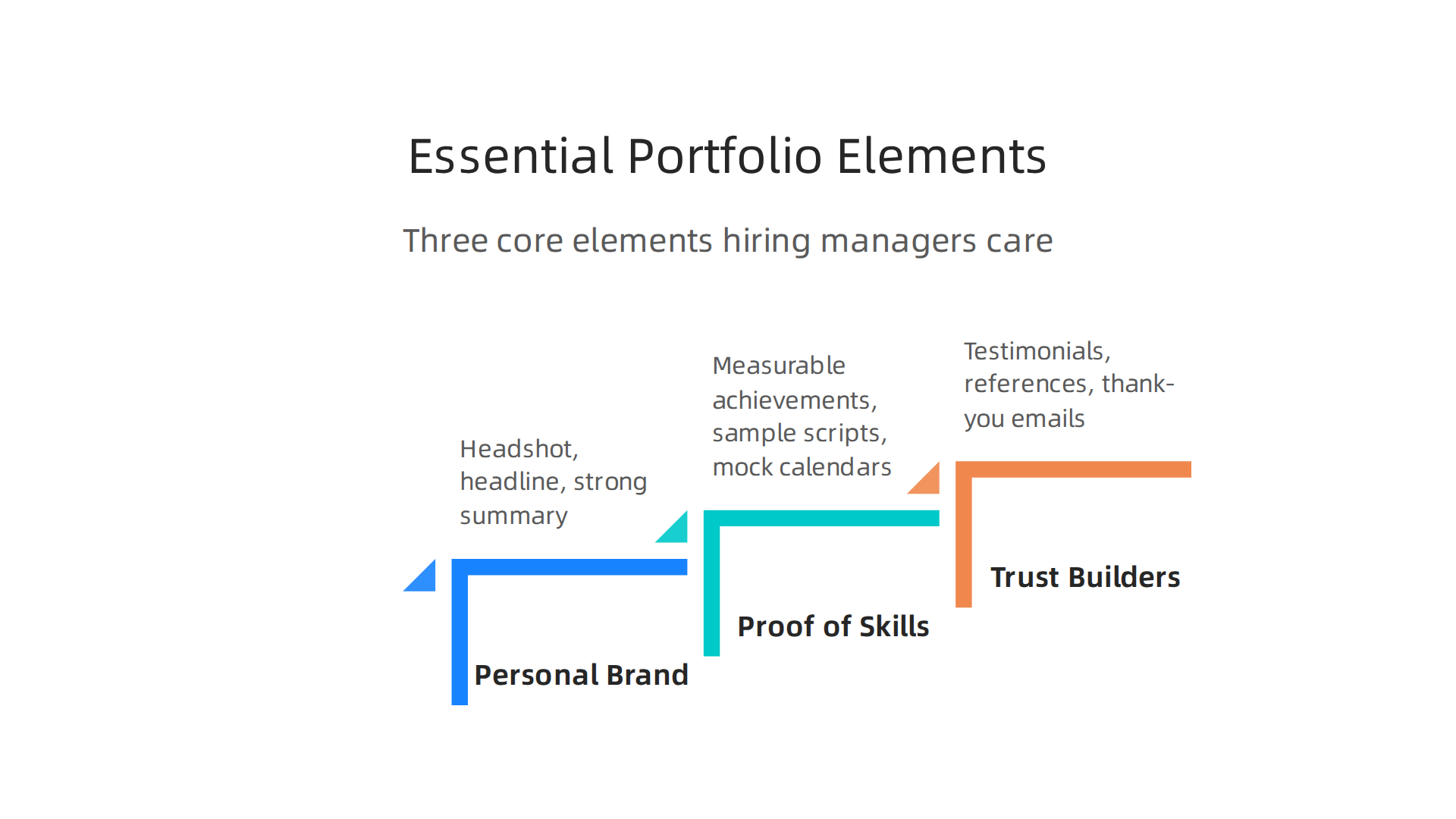
Your professional headshot, a clear headline, and a strong summary
First impressions happen fast. A professional headshot makes you look serious and trustworthy. No selfies or cropped group photos. Just a clean, well-lit photo where you look approachable.
Next comes your headline. This is the short line under your name. Make it specific. Instead of "Remote Appointment Setter," try something like "Appointment Setter with 40% Conversion Rate in B2B Sales."
Then write a two to three sentence summary of your value proposition. What do you do best? Who do you help? Keep it simple and direct. This part is like your elevator pitch on the page.
Measurable achievements that prove your skills
Hiring managers love numbers. Do not just say you made calls. Say you made 80 calls per day and booked 15 qualified appointments per week. Show your conversion rates, lead response times, or any quota you hit consistently.
If you are just starting out and do not have numbers yet, use examples from practice or training. You can show a sample call script you wrote or a mock calendar with booked appointments. The key is to show proof of your ability.
Testimonials or references to build trust
Social proof is powerful. If you have past clients or managers who will vouch for you, ask for a short quote. One strong testimonial can do more for your credibility than ten bullet points.
No testimonials yet? That is okay. You can list references with their permission. Or show a thank you email from a past client. Even small bits of positive feedback count.
Now here is the good news. You can build all of this using a completely free portfolio website. Many builders let you create a professional site at no cost. According to a detailed comparison, Wix offers powerful design tools and over 2,500 templates for free, making it a top choice for beginners.
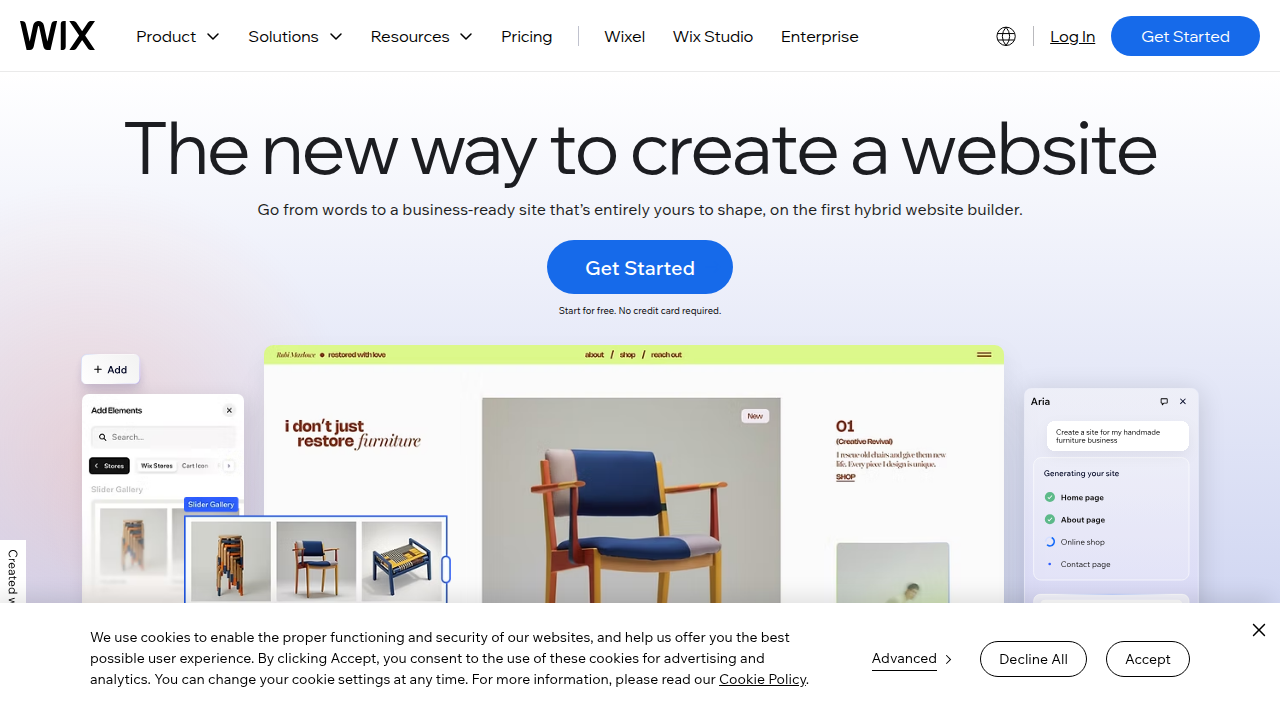
You can also explore other options like Carrd, Canva, or Reactive Resume depending on what feels easiest for you.
If you want a more custom look, start with figma website design templates. These give you a professional layout that you can then upload to your free builder. And once your site is live, pay attention to speed. A slow page makes you look unprofessional. Use a website speed optimization service to keep loading times fast and visitors happy.
Want to learn more about the specific skills that make appointment setters successful? Read our guide on remote appointment setter skills and career path for a deeper look.
When your portfolio is ready with these three elements, you will stand out instantly. The next step is knowing how to share it effectively with hiring managers. View Articles for practical tips on getting your portfolio in front of the right people.
Step-by-Step Guide to Building Your Free Portfolio Website
So you have your headshot, your achievements, and your testimonials ready. Now you need a place to put them all. The idea of building a website from scratch sounds hard, right? You might think you need to learn coding or spend a lot of money.
Here is the good news. You can build a professional looking portfolio completely for free in under an hour. Let me walk you through it step by step.
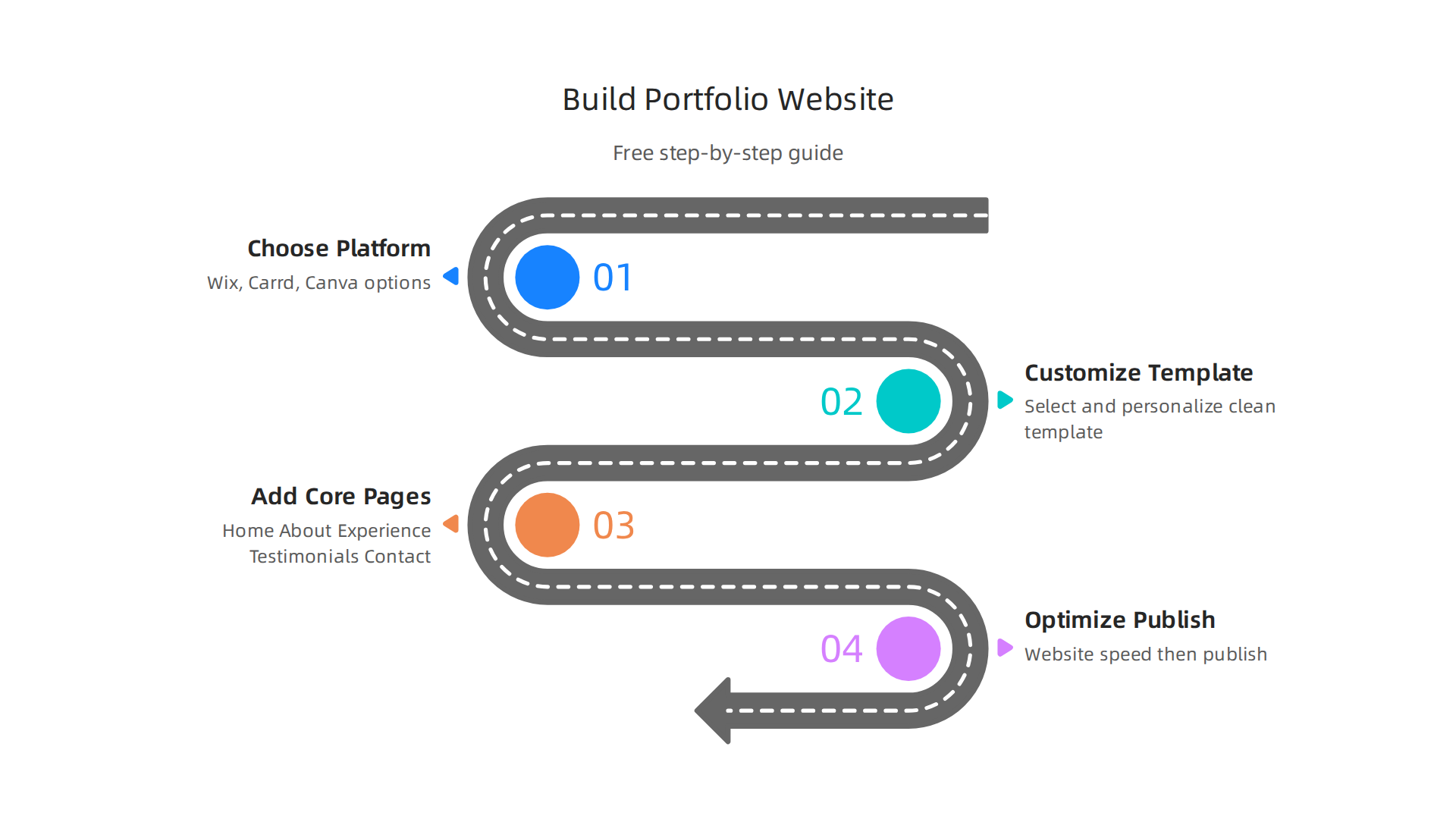
Step 1: Choose Your Free Platform
You have several solid options in 2026. The best one depends on how much control you want.
Wix is the top choice for most people. According to expert reviews, Wix gives you over 2,500 professional templates and powerful drag and drop tools for zero cost. It is the most generous free builder on the market.
Carrd is perfect if you want a simple one-page site. It loads fast and is very easy to set up.
Canva works well if you prefer a more visual, design-heavy approach to your resume site.
WordPress.com gives you more flexibility if you want to grow your site later.
Take a few minutes to explore these platforms. Pick the one that feels easiest for you.
Step 2: Select a Clean Template and Customize It
Once you pick your platform, choose a template that looks clean and professional. Avoid busy layouts with too many colors or flashy animations. Your achievements should be the star of the show, not the website design.
Customize the template to match your personal brand. Change the colors and fonts. Swap out the placeholder images with your professional headshot.
If you want a truly unique layout, start with Figma website design templates.
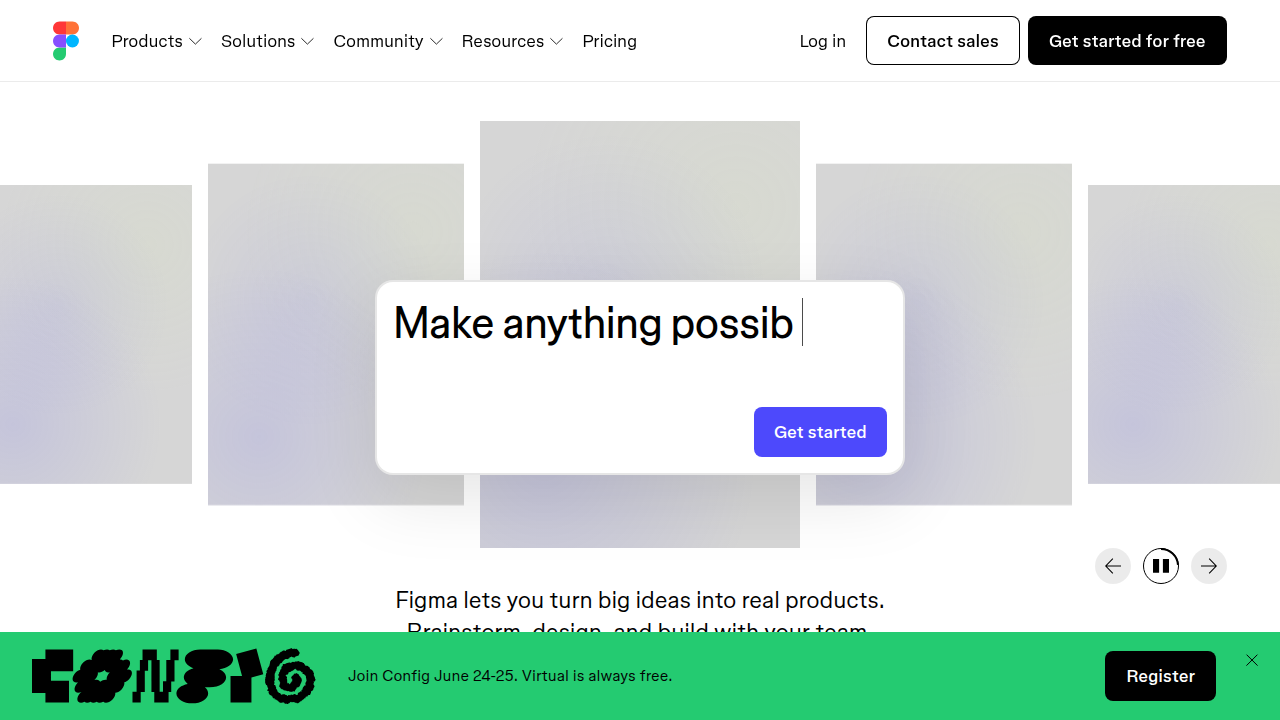
These give you a professional blueprint that you can then upload and customize on your free builder for a high-end look without the high-end price.
Step 3: Add Your Core Pages
Remember the elements we talked about earlier? Your portfolio needs dedicated pages to organize them properly.
- Home: Your strong headline and a short value proposition. Make it clear who you are and what you do.
- About: Your professional story with a touch of personality. Let them see the person behind the resume.
- Experience or Skills: This is where your measurable achievements live. Show your conversion rates, call stats, and quotas met.
- Testimonials: Dedicate a section to social proof. One strong quote can close the deal.
- Contact: Make it incredibly simple for hiring managers to reach you. Include a form, your email, and links to your LinkedIn profile.
This structure makes it easy for recruiters to find exactly what they are looking for in seconds.
Step 4: Optimize and Go Live
Before you share your site, make sure it loads fast. A slow website can cost you opportunities. Visitors expect pages to load instantly. Use a website speed optimization service to keep loading times fast and make a great first impression every time.
Once everything looks good, hit publish. You now have a professional portfolio that highlights exactly what hiring managers want to see.
If you want to make sure your sales skills are just as polished as your new site, read our guide on remote appointment setter skills and career path to fill any gaps.
Ready to start building and land that remote role? Explore actionable guides and training recommendations. Get Started.
Content Strategies: Showcasing Your Skills with Metrics
You have a clean, professional portfolio website now. But what do you actually put inside it? Just listing your job duties won’t cut it. Hiring managers have seen a thousand resumes that say "responsible for cold calling." That tells them nothing.
They want proof. Hard proof. And the best proof comes in the form of numbers.
Use numbers to tell your story
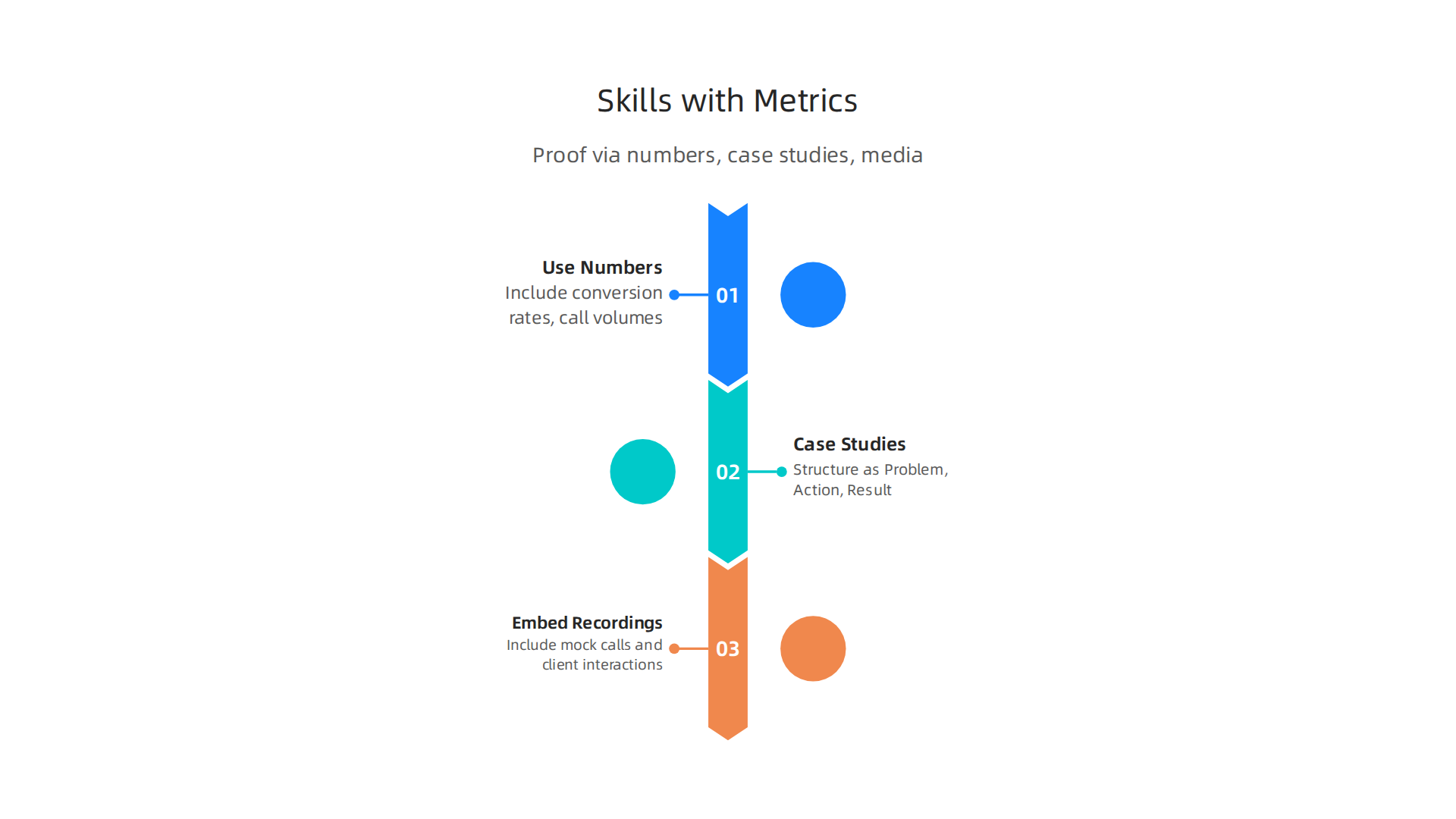
Instead of saying "I made a lot of calls," say this: "Set 50+ appointments per week with a 30% conversion rate." See the difference? The second one paints a clear picture of your ability. It shows you know what a good result looks like.
In 2026, a healthy appointment setting conversion rate from cold outreach is around 10 to 20 percent according to industry benchmarks. If your numbers are in that range, shout it from the rooftops. If they are higher, even better. If they are lower, frame the story around improvement. "Grew conversion rate from 8% to 15% over three months." That shows growth and coachability.
Using specific metrics on your free portfolio website makes you stand out fast.
Create case studies from past successes
Even if your experience comes from a different industry, you can build case studies. Pick a specific win. Describe the problem you faced. Explain what you did. Share the measurable result.
For example: "At my previous retail job, our team was missing daily sales targets. I introduced a new follow up system for repeat customers. Within 30 days, repeat purchases increased by 25%." That is a case study. It proves you can solve problems and drive outcomes.
Embed audio or video recordings
If you have permission, record a mock call or a real call (with names removed). Add that recording directly to your portfolio site. Nothing beats hearing your actual communication skills in action. It shows confidence, tone, and objection handling in a way text never can.
Optimize your portfolio for search too
Once your content is strong, make sure people can find it. A portfolio SEO optimization guide can help you rank higher on Google so hiring managers discover your site naturally.
Your portfolio website is now more than a digital business card. It is a living document of your ability to deliver results. Populate it with hard numbers, real stories, and actual recordings. That is how you turn a free builder template into a powerful job magnet.
Want to learn more ways to strengthen your profile for remote appointment setter roles? Check out our guide on how to become a remote appointment setter in 2026 for extra strategies. And if you need personalized help mapping out your next steps, Book Now to talk through your options.
Optimizing Your Portfolio for Search and Conversion
You have built a stunning free portfolio website filled with hard numbers and real recordings. That is a great start. But none of it matters if hiring managers cannot find your site in the first place.
Here is the truth. Most applicants rely on job boards alone. You have a secret weapon. A well optimized portfolio site that ranks on Google. In 2026, that edge matters more than ever.
Start with keyword basics
Think about what a hiring manager types into Google. "Remote appointment setter with healthcare experience." "B2B lead generation specialist." "Cold outreach expert with proven results." Those are your keywords. Use them naturally in your headlines, subheadings, and body text.
Do not forget your meta description. That is the short blurb that shows up under your link in search results. Write one that includes your target keywords and a clear value promise. Something like "Remote appointment setter specializing in SaaS outreach. 20% conversion rate. View my metrics and portfolio."
Also add descriptive alt text to every image you use. If you include screenshots of your dashboard or a graph of your results, describe what is shown using relevant terms. This helps Google understand your content and improves accessibility at the same time.
For a full breakdown of how to get this right, the portfolio SEO optimization guide walks through every step with examples.
Add clear calls to action
Your portfolio is not a museum exhibit. It is a sales tool. Tell visitors exactly what to do next. Put a button at the top that says "Hire Me" or "Schedule a Chat." Add another one near your case studies that says "View My Resume." Make these links visible and easy to tap on any device.
Each page on your site should have at least one clear next step. If someone reads your best case study, they should see a button right below it inviting them to book a conversation. That is how you turn curious visitors into job interviews.
Speed matters more than you think
Here is a hard fact. Most visitors leave a site that takes longer than three seconds to load. Hiring managers are busy people. They will not wait for your images to load or your layout to settle.
Use a website speed optimization service to compress your images and clean up your code. Test your site on a phone and a tablet. Make sure buttons are big enough to tap with a thumb. Make sure text is readable without zooming.
A slow site hurts your chances before anyone even reads your numbers. Fast and mobile friendly. That is the standard in 2026.
Look at it from the hiring manager’s perspective
Imagine you are searching for a remote appointment setter.

You click on a portfolio link. The page loads instantly on your phone. You see a clear headline with relevant skills. A button right there says "Schedule a Chat." You click it. The contact form works perfectly.
That experience makes you want to hire that person. Everything aligns. Your portfolio should create that same feeling.
Your free portfolio website is now findable, fast, and conversion focused. That combination puts you ahead of most applicants who still rely on a plain PDF resume. If you want personalized help fine tuning your site or your overall job search strategy, Contact Us to talk about next steps.
Common Mistakes to Avoid When Building Your Portfolio
Building your free portfolio website is exciting. But it is easy to make mistakes that hurt your chances with hiring managers.
Let us look at the most common ones so you can avoid them.
Mistake 1: Cluttered layouts and too much animation
Hiring managers scan quickly. If your site has too many moving parts or a chaotic design, they leave. Over 70% of visitors now view portfolios on mobile devices. A busy layout looks even worse on a small screen. Keep your design clean and simple. Use a clear structure that puts your best results front and center.
Mistake 2: Listing every job you have ever had
Your portfolio is not a resume in chronological order. Focus only on experience that matters for appointment setting. If you worked retail five years ago, skip it. Hiring managers want to see relevant skills like lead generation and cold outreach. An incomplete profile or irrelevant job list signals lack of effort. Keep it tight and targeted. To build the right skills, check out our guide on market research methods every remote appointment setter needs.
Mistake 3: Making up metrics or testimonials
This one is huge. Never fake your numbers. Ever. Hiring managers in 2026 verify claims. If they catch a lie, you are out. Be 100% honest about your conversion rates, call volumes, and client feedback. Authenticity builds trust. And trust lands jobs.
Your free portfolio website can be a powerful tool. Avoid these errors and you will stand out. If you want help polishing your application, contact us to learn more.
Real-World Portfolio Examples to Inspire You
Now that you know what to avoid, let us look at some portfolios that actually work.

These examples are anonymized, but they come from real appointment setters who landed remote jobs in 2026. The key is to see how different styles can help you stand out.
Example 1: The Minimal Style
This appointment setter uses a clean, simple layout. No animation. No flashy colors. Just a white background, clear headings, and bold numbers. The homepage shows three key metrics: calls made, appointments booked, and conversion rate. Below that, a short bio explains their approach. Why does this work? Hiring managers can find the important info in seconds. Plus, the site loads fast on any device. Over 70% of visitors now view websites from their phones, so speed matters. You can copy this style by choosing a simple template and focusing on your best results.
Example 2: The Metric-Heavy Style
Another successful portfolio leads with numbers everywhere. Every job or project has a stat: "Increased lead response time by 40%" or "Booked 120 appointments in Q3 alone." This style works because hiring managers love proof. Numbers are easier to trust than vague claims. To adapt this, list your top metrics for each role. Use bullet points for easy scanning. And always be honest. A single fake number can ruin your reputation.
Example 3: The Video-Centric Style
This appointment setter includes a short intro video right on the homepage. They explain their process and show a clip of a real call (with client permission). Video builds a personal connection fast. Hiring managers can see your tone, energy, and professionalism before they even read your resume. To try this, record a 60-second video on your phone. Keep it natural. No scripts needed.
Quick Tips to Adapt These Styles
- Use a free portfolio website builder to get started fast.
- Keep all pages simple and focused on appointment setting skills.
- Add a "Contact" section with your email and LinkedIn.
If you want to learn more about building the right skills for a remote role, check out our guide on how to become a remote appointment setter in 2026. It covers training, tools, and exactly what hiring managers look for.
Ready to build your own portfolio? Start with one of these styles and make it your own. We have more resources to help you land that first appointment setter job. View our articles for step-by-step guides and insider tips.
Maintaining and Updating Your Portfolio for Long-Term Success
You built your portfolio. It looks great and you landed some interviews. But here is the thing: a portfolio is not a one-time project. It needs regular care to stay effective. Think of it like a garden. If you stop watering it, the weeds show up. An outdated portfolio can hurt your chances more than having no portfolio at all.
Set a schedule to refresh your content. Experts recommend updating your website content at least once a month, with bigger design changes every 2 to 3 years. For an appointment setter, a quarterly review works well. Use a free portfolio website builder that makes updates easy.
After you land a big client or hit a new record, add that win right away. Do not wait until your next quarterly check.
Tracking your portfolio performance is just as important. Use free analytics tools like Google Analytics free tier to see how visitors find you and what they click. The Gravitate Design maintenance checklist reminds you to check site speed, fix broken links, and review SEO performance regularly. If you notice visitors leave after the first page, test new layouts or headlines. Small changes can make a big difference.
Keep your contact information and CTAs current. Nothing frustrates a hiring manager more than an email address that bounces or a "Book Now" button that goes nowhere. Update your LinkedIn, email, and phone number every time you check your portfolio. You can also review your user experience design process to make sure your portfolio feels smooth and professional.
A well-maintained portfolio shows you care about details. That is exactly the trait hiring managers look for in an appointment setter. Ready to learn more about building a complete career plan? View our articles for ongoing tips and strategies.
Summary
This article shows appointment setters how to create a professional, free portfolio website that makes them stand out in a crowded remote hiring market. It explains why a portfolio matters, which core elements hiring managers look for (professional photo, clear headline, measurable results, testimonials), and gives a step-by-step walkthrough for building a site using free platforms and Figma templates. You’ll learn how to present hard metrics, craft case studies, and include audio or video proof of your skills, plus how to optimize your site for search, speed, and conversions. The guide also lists common mistakes to avoid, offers real portfolio styles you can copy, and explains a maintenance schedule so your site stays current. By following these instructions you’ll have a focused, fast, and findable portfolio that turns visitors into interviews and hires.
More articles