
How Cox Business Knowledge Makes You a Better Remote Appointment Setter

Why Cox Business matters to remote appointment setters
In 2026, many small and medium businesses need fast internet and helpful phone services to grow. They also need smart solutions to keep their businesses running smoothly. This is where companies like Cox Business come in. Cox Business is a big helper for these companies, providing important services like super-fast internet, phone lines, and other managed services that help businesses stay connected and work better
[1, 2].
Think about it: every business needs good internet, right? Cox Business offers reliable, high-speed options, including fiber services, and even gives businesses access to millions of Wi-Fi hotspots [3, 4]. They provide tailored solutions to fit different business sizes and needs, whether it’s a small shop or a bigger company [5]. They also help businesses keep up with new trends like AI and IoT in 2026 [6]. All these services mean that Cox Business needs to talk to a lot of companies. And that, my friend, is where you, as a remote appointment setter, can find a great opportunity!
Many companies work with Cox Business, or offer similar services, and they often need people to help them set up meetings with potential customers. Your job would be to find businesses that might need these services and schedule a time for a sales team to talk with them. It’s a way to make money from home, helping businesses connect with the solutions they need.
But here’s the thing: finding real remote jobs can sometimes be tricky. You might wonder what skills you need or if a job offer is truly legitimate. Don’t worry, we’ll help you understand how to spot good remote appointment setting roles, what important skills you should have, and what a realistic career path looks like in this growing field. Knowing about companies like Cox Business is a smart first step to finding these exciting opportunities. If you’re ready to learn more about starting your own path, we can show you how to become a remote appointment setter in 2026: the simple method.
To be a great remote appointment setter, it really helps to know what a company like Cox Business offers. Think of it like this: if you know what tools a carpenter uses, you can better understand who needs those tools. Cox Business has many helpful tools or "business services" that companies need to run well in 2026 [1].
Here’s a simple look at the main services Cox Business provides and how you can talk about them when setting appointments:
-
Super Fast Internet
- What it is: This is reliable, high-speed internet, including fiber connections, for businesses [2]. Cox Business also gives access to millions of Wi-Fi hotspots [3].
- Why businesses need it: Their current internet might be too slow, they’re opening a new shop, or they just need something more dependable [4]. Many businesses in 2026 need fast internet for things like AI tools or connecting many devices [5].
- For appointment setters: You can ask things like, "Is your internet fast enough for all your workers?" or "Do customers ever complain about your Wi-Fi?" The owner or office manager usually decides on this.
-
Clear Phone Services
- What it is: These are phone lines and tools that help people talk and work together, like video calls and team chats [6]. Cox Business often bundles phone and internet together [7].
- Why businesses need it: Their old phone system might be breaking down, or they need better ways for their team to communicate, especially if some work from home.
- For appointment setters: Ask, "How do your employees talk to each other and to customers?" or "Are you looking for ways to make team calls easier?" The business owner is key here.
-
Easy Wi-Fi Management
- What it is: Cox Business can set up and handle all your company’s Wi-Fi. This means guest Wi-Fi for customers and a separate, safe Wi-Fi for staff [3].
- Why businesses need it: They might have bad Wi-Fi signals, worry about online safety, or want to offer Wi-Fi to their customers without stress.
- For appointment setters: A good question is, "Is your Wi-Fi strong everywhere in your business?" or "Do you need a secure way for your customers to use Wi-Fi?" You’d talk to the owner or a store manager.
-
Smart Networking
- What it is: This is about connecting different parts of a business, especially if it has more than one location. It helps all the offices talk to each other safely.
- Why businesses need it: They might be growing and opening new spots, or they need a very secure way to share information between offices.
- For appointment setters: Try asking, "Do you have more than one office?" or "How do your different locations share important files?" The IT person or owner would be the one to talk to.
-
Strong Security
- What it is: Cox Business helps protect a company’s data and computers from online bad guys and threats [5].
- Why businesses need it: They worry about their customer information being stolen, or they need to follow rules about keeping data safe.
- For appointment setters: You could ask, "How do you keep your business safe from online attacks?" or "Are you concerned about protecting your customer data?" The owner or IT manager usually thinks about this.
Knowing these things makes your job easier as an appointment setter. You can listen for clues from businesses about their needs and then suggest how Cox Business can help. It’s like being a detective for business problems and solutions! If you want to dive deeper into how to find these important clues and connect with businesses, check out our guide on how small business policy makes you a better remote appointment setter.
Ready to learn how to connect businesses with solutions like these? Our platform offers clear steps to help you start your journey as a remote appointment setter.
To be a successful remote appointment setter, knowing the services that Cox Business offers is just one part. The other big part is knowing who needs those services. Think of it like this: if you sell umbrellas, you want to talk to people who expect rain. For Cox Business, you want to talk to businesses that need better internet, clearer phones, or stronger security.
Let’s look at the kinds of customers who most often choose Cox Business services.
Customer Profiles: Who Needs Cox Business?
Many types of businesses need modern technology to run well in 2026. Cox Business mainly helps small to medium-sized businesses.
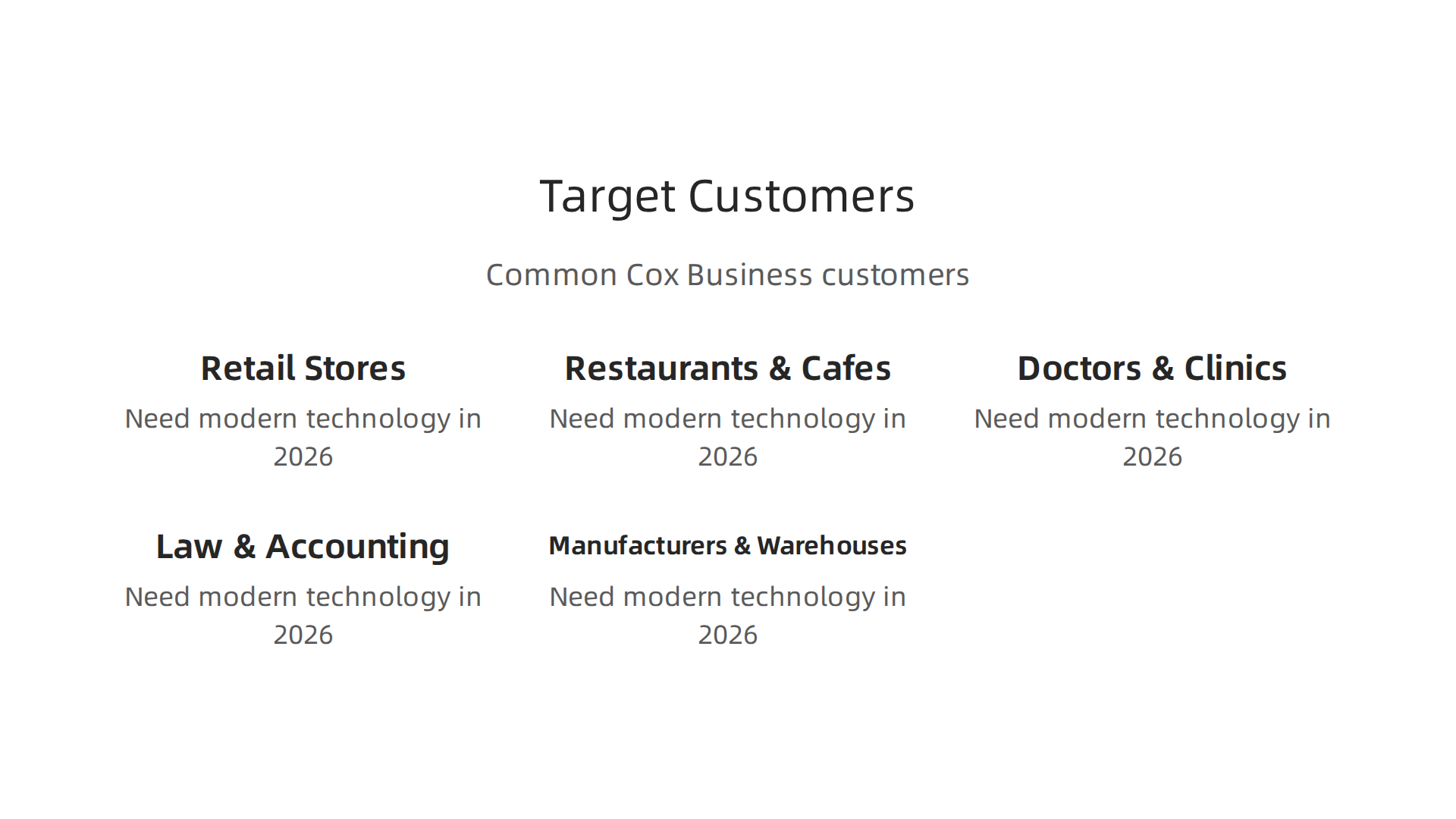
These aren’t the giant companies, but they’re not just one-person shops either.
Here are some examples:
- Retail Stores and Shops: These businesses need fast, reliable internet for their cash registers, online sales, and often for guest Wi-Fi.

They might also need phone systems to talk to suppliers and customers.
- Restaurants and Cafes: Like retail, they need good Wi-Fi for guests and staff. Fast internet helps with order taking and payment systems.
- Doctor’s Offices and Clinics: They need very secure internet to protect patient information, which is a big rule they must follow. Clear phone lines are also very important for booking appointments and talking to patients. Many businesses now rely on advanced tools that require strong connections, and staying secure online is a major concern for companies in 2026 [1, 2].
- Law Firms and Accounting Offices: These professional businesses handle lots of important documents online. They need quick, secure ways to send and receive files, and clear communication tools for their team and clients.
- Small Manufacturers or Warehouses: They often use smart systems that connect many devices. This needs strong, reliable network connections.
A common problem for these businesses is having internet that’s too slow, phone systems that don’t work well, or worries about online safety. Cox Business provides solutions to these everyday business problems.
Where These Customers Are Located
The location of a business also helps you find good leads.
- Suburban and Urban Small Businesses: Whether a business is in a busy city or a quieter town, they still need great internet and phone services. Many businesses, especially small ones, want to make sure their internet and phone systems are always working well.
- Businesses with More Than One Location: If a company has two or three stores or offices, they often need a smart way to connect them all. Cox Business offers networking solutions that help all locations share information safely and easily. This is a big deal for growing companies.
Understanding these details helps you, as a remote appointment setter, know exactly who to call. You can listen for clues about a business’s size, its industry, and any problems they’re having with their current internet or phone service. Then, you can show them how Cox Business provides the business services they need.
Being good at finding the right customers means you’re good at finding solutions. If you’re ready to learn more about starting your own journey in this field, we have a helpful guide on how to become a remote appointment setter in 2026: the simple method.
Typical Tech Stack and Partner Integrations to Expect (CRMs, Phone Systems, Provisioning)
Just knowing who needs Cox Business services isn’t enough. You also need to understand how those businesses work and what technology they use every day in 2026. This is called their "tech stack." It’s like knowing what tools a builder uses. When you know a business’s tools, you can better see how Cox Business can help them. Modern companies, big or small, rely heavily on digital tools for smooth operations and to keep up with current tech trends [1].
Here are the common types of technology you’ll likely hear about or encounter:
1. Customer Relationship Management (CRM) Systems
Many businesses use CRM software to keep track of their customers. Think of it as a super smart address book and notepad all rolled into one. It helps them remember customer names, what they bought, and when to call them again. Popular CRMs include Salesforce, HubSpot, or smaller, simpler tools.
Why this matters for you:
- Businesses need fast, reliable internet from a provider like Cox Business to make their CRM work well, especially if it’s cloud-based.
- Knowing a business uses a CRM shows they care about their customers and organization, making them a good fit for solid business services.
- If a company’s CRM is slow, it could be a sign their internet isn’t good enough.
2. Phone Systems (VoIP/UC Platforms)
Gone are the days when most businesses used old landline phones. In 2026, most businesses use Voice over Internet Protocol (VoIP) phones. These phones use the internet to make calls, which is often cheaper and offers more features like video calls and instant messaging. This is part of a bigger idea called Unified Communications (UC). Many businesses are looking for ways to improve their communications and data handling [2].
Why this matters for you:
- A business with an old phone system might be looking to upgrade to a modern VoIP system, which needs excellent internet connection from Cox Business.
- If a business has multiple locations, a UC platform helps them all connect easily. Cox Business can help with the strong network they need.
- Clear phone lines are super important for all business communication, showing a need for reliable service.
3. Ticketing and Installation Tools (Provisioning)
When a business needs a new service, like faster internet or a new phone line, there’s a process for setting it up. This is often called "provisioning." Companies, especially larger ones or resellers working with Cox Business, use special software for this. These "ticketing" systems help them track orders, schedule installations, and fix any problems quickly. This shows that businesses are constantly looking to manage their IT and communications efficiently [3].
Why this matters for you:
- When you talk to a business, they might mention problems with their current provider’s installation or support. This is a chance for Cox Business to shine.
- Understanding that these tools exist helps you realize that installing new services is a planned process for businesses. You’re setting up the first step in that process.
What This Means for Remote Appointment Setters
Knowing about these common tech tools makes you a much better remote appointment setter.
- Better Qualification: You can ask smart questions. For example, "How does your current internet support your cloud-based CRM?" or "Are your phone calls clear when you use your VoIP system?"
- Tailored Conversations: You can talk about specific benefits. If a business is having trouble with slow internet, you can explain how Cox Business can speed up their CRM and VoIP.
- Spotting Opportunities: If a company is using outdated tech, it’s a clear sign they might need the modern business services Cox Business offers.
Actually, having a good grasp of a business’s tech needs helps you connect their problems to the solutions offered by Cox Business. This knowledge is key to moving forward in the world of remote appointment setting. If you’re eager to sharpen your skills and find success, learning how to leverage these insights can be a game-changer for how to make money online in 2026: the remote appointment setting guide.
Understanding the tools businesses use, like CRMs and VoIP phones, is super helpful. But who actually connects these businesses with better services? That’s where remote appointment setters come in. Let’s look at where you fit in the big picture, especially when helping businesses find solutions like those from Cox Business.
Where remote appointment setters fit: roles, responsibilities, and day-to-day activities
When you think about getting a business new internet or phone services, there are a few key people involved. It helps to know the difference between them.
Who’s Who in the Business Services World
- Internal Cox Business Reps: These people work directly for Cox Business. They are part of the company’s own sales team. They might find customers, sell services, and manage existing accounts. They are "in-house."
- Third-Party Resellers: These are other companies that sell Cox Business services, usually alongside their own products or as part of a bigger package. They have a special agreement with Cox Business. They act as another way for businesses to get Cox services.
- Remote Appointment Setters: This is where you come in! You typically work for agencies or companies that partner with Cox Business or its resellers. Your main job is not to sell the service itself, but to find potential customers and set up the first meeting or call for a sales team
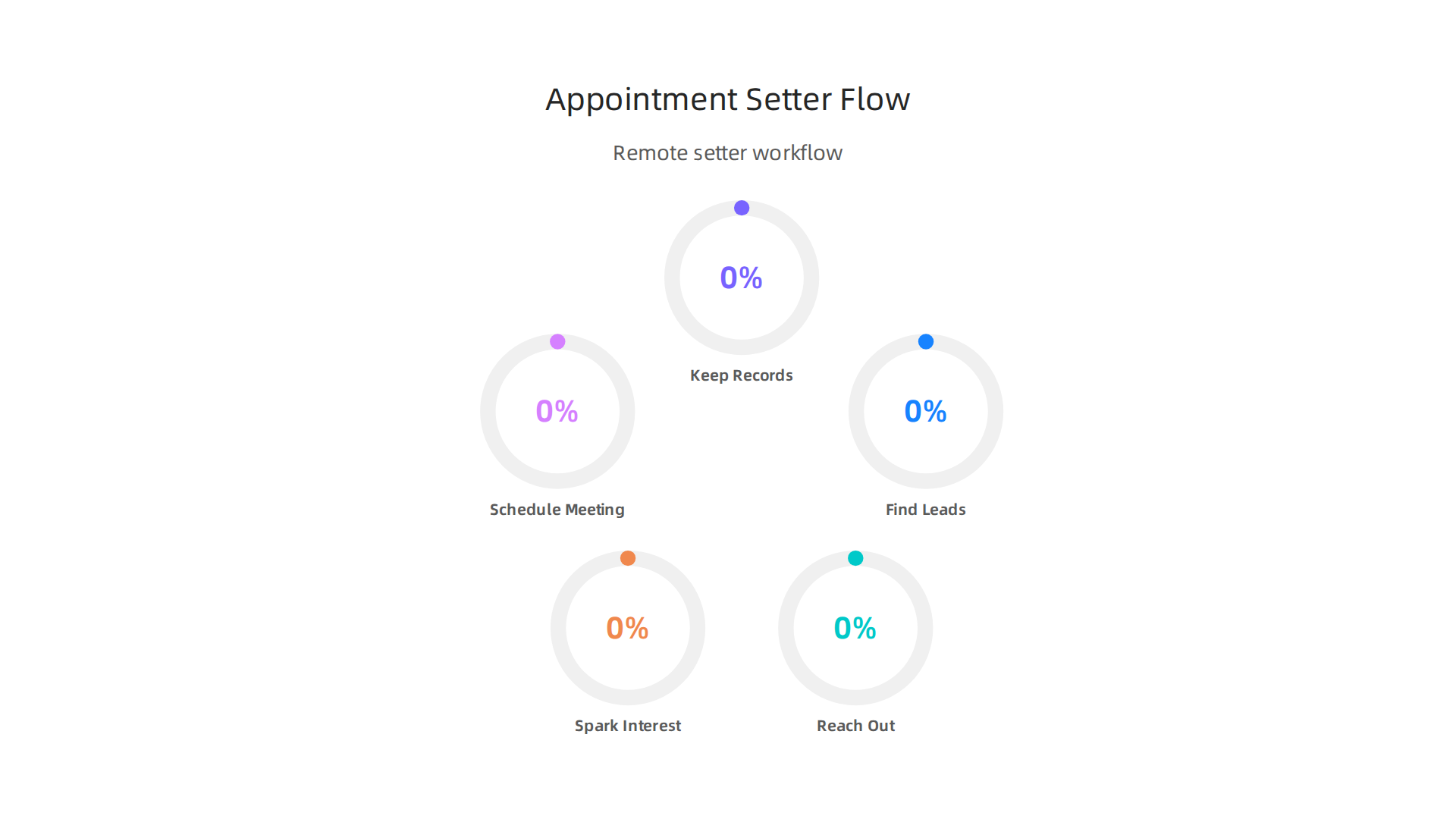
[2, 6]. You are the very first step in helping a business find a solution. You are the bridge between a business needing help and the sales team that can provide it [5].
What a Remote Appointment Setter Does Each Day
As a remote appointment setter focusing on business services like those from Cox Business, your daily tasks are clear and important:
- Finding Potential Customers: You’ll look for businesses that might need better internet, phone systems, or other business services. This is called lead generation [1].
- Reaching Out: You’ll use calls, emails, or messages to talk to these businesses. You’ll ask smart questions based on what you learned about tech stacks. For example, "How is your current internet supporting your business central software?"
- Sparking Interest: Your goal is to get the business interested in learning more. You explain why talking to a sales expert from Cox Business could help them. Maybe their current internet is slow, or their phone system is old.
- Scheduling Meetings: When a business shows interest, you set up a specific time for them to meet or talk with a sales representative

[7]. This meeting is often called a "discovery call" or a "consultation."
- Keeping Records: You’ll keep track of all your conversations and scheduled appointments, usually in a Customer Relationship Management (CRM) system [5]. This helps everyone stay organized.
How Success is Measured (KPIs)
Your success as a remote appointment setter is often measured by how many good appointments you set. These are called Key Performance Indicators (KPIs):
- Calls or Emails Made: How many times you reached out to potential customers.
- Qualified Leads: How many businesses you found that actually fit the customer profile for Cox Business services.
- Appointments Set: The number of meetings you successfully scheduled.
- Held Appointments: This is often the most important. It’s about how many of those scheduled meetings actually happen. The goal is to set appointments that genuinely lead to sales conversations.
In 2026, many companies like Cox Business and even competitors like Comcast Business rely on skilled remote appointment setters to connect with new clients. Knowing how to do this well is a valuable skill in the modern job market. To learn more about starting this exciting path, you can check out our guide on how to become a remote appointment setter in 2026: the simple method.
When you’re looking for a remote appointment setter job, especially one helping companies like Cox Business, it’s super important to make sure the job is real.

There are many great opportunities out there, but you also need to know how to spot fake ones or jobs that won’t pay you fairly. Here’s how to check if an offer is good and true.
How to Tell if a Job Listing is Real
Finding a real remote appointment setting role for business services means doing a little homework. You want to know if you’re working directly for Cox Business, for one of their trusted partners, or for someone else.
1. Who is the Employer?
First, try to figure out who is offering the job:
- Directly with Cox Business: If the job says it’s directly with Cox Business, check their official career website. All their real job openings will be listed there. If it’s not on their site, it’s probably not a direct job.
- A Certified Partner or Reseller: Many big companies, like Cox Business and even competitors such as Comcast Business, work with other companies, called partners or resellers. These partners help sell business services. To check if a partner is real, you can sometimes look for a "partners" section on the main Cox Business website or check if the partner company is mentioned in official channels [1]. Real telecom dealers are usually listed or can be verified through industry programs [2].
- An Unrelated Third Party: This is where you need to be careful. Some people might pretend to be partners or even Cox Business itself to trick you. Always check the company’s website and look for reviews.
2. What to Look For in the Job Listing (Red Flags)
When you see a job post, watch out for these warning signs:
- Asks for Money: A real job should never ask you to pay for training, software, or background checks. That’s a big red flag.
- "Too Good to Be True" Pay: If the money they promise sounds really, really high for doing very little, it might be a scam. Be careful with promises of easy riches.
- Generic Email Addresses: If the email contact is something like
@gmail.cominstead of@companyname.com, that’s a sign it might not be a real business. - Bad Grammar or Spelling: Professional companies usually have clear, well-written job descriptions. Mistakes can mean it’s not a serious offer.
- Pressure to Act Fast: Scammers often try to rush you into making a decision without giving you time to think or ask questions.
- Vague Details: If the job description doesn’t clearly explain what you’ll do, who you’ll work for, or how you’ll get paid, be wary.
3. Checking Contracts and Payments
Before you agree to any job, make sure you understand these things:
- Clear Contract: You should always get a written agreement. This document should explain your role, your pay, and your hours. Read it carefully.
- Payment Terms: How will you get paid? Is it hourly, commission, or a mix? Make sure it’s clearly stated and makes sense. Avoid companies that are unclear about payment or change terms often.
Finding a good remote appointment setting job helping businesses with their services is exciting. Just remember to take your time, ask questions, and verify who you’re working with. This way, you can be sure you’re stepping into a legitimate and rewarding role. If you want to learn more about earning money in this field, check out our guide on how to make money online as a remote appointment setter in 2026 for more helpful tips.
To do well in a remote appointment setting job, especially when helping companies like Cox Business, you need to have certain skills and know how to use some key tools. It’s like preparing for a big game; you need the right moves and the right gear. Let’s look at what you need to get ready for a rewarding role in 2026.
Skills, Training, and Tools to Prepare: From Scripts to CRM Familiarity
Getting a remote appointment setting job, particularly one focused on business services, means you need a mix of talking skills and tech skills.
What Skills Do You Need?
Even if you’re new to this, these are the main skills you’ll want to learn:
- Asking Good Questions: This means knowing how to ask the right things to find out if a business truly needs what you’re offering. It helps you figure out if they are a good fit for services from companies like Cox Business or Comcast Business.
- Handling "No": People won’t always say yes right away. You need to know how to respond kindly when someone says they’re not interested. This is called "objection handling," and it’s a big part of sales.
- Setting Appointments Smoothly: You’ll need a good rhythm for your calls or messages. This "appointment-setting cadence" helps you reach enough people and set a good number of meetings without feeling rushed. You might use a script to help you stay on track and deliver important information clearly.
How to Get Training
The good news is that many companies will train you once you get hired [1]. But if you want to get a head start, there are ways to learn on your own:
- Online Guides: Many websites offer free guides and tips for beginners. These can teach you the basics of sales and communication. If you’re looking for more ways to learn, you can check out our guide on how to become a remote appointment setter.
- Practice: Try practicing with a friend or family member. Pretend they are a customer and you’re trying to set an appointment for a business service. The more you practice, the better you’ll get.
Important Tools to Learn
Remote appointment setters use special computer programs to do their work. Here are some you should know:
- CRM (Customer Relationship Management): Think of a CRM like a smart address book for all your customers and potential customers. Programs like Salesforce, HubSpot, or Zoho CRM help you keep track of who you’ve talked to, what you talked about, and when to follow up.
Getting familiar with any CRM is a big plus for employers.
- Dialers: These are tools that help you make calls faster. Some dialers can call many numbers for you and connect you only when someone answers. This makes your work more efficient.
- Reporting Tools: It’s important to track your work. Companies want to see how many calls you make, how many appointments you set, and how well you’re doing. Learning how to use simple reporting tools helps you show your value. Keeping good records helps show your productivity in a digital workplace [2].
Learning these skills and tools will make you a strong candidate for remote appointment setting jobs, whether they are for large providers or their certified partners.
Finding Openings and Applying: Job Channels, Resume Tips, and Career Progression
After you’ve sharpened your skills and learned about the right tools, the next step is to find those great remote appointment setting jobs. It’s exciting to think about landing a role where you help businesses connect with important services, maybe even for big names like Cox Business or Comcast Business. Let’s look at the best places to find these jobs and how to make a good impression.
Where to Look for Remote Appointment Setter Jobs
Finding a real, good job takes knowing where to search. Here are the best spots in 2026:
- Company Career Pages: Many large companies that offer business services, like Cox Business, often list job openings directly on their own websites. This is a very reliable way to find jobs because you are looking at the source.
- Certified Partner Websites: Sometimes, big companies work with smaller, trusted partners or resellers to help them reach more customers. These partners also hire appointment setters. You can often find these by looking for "authorized dealers" or "certified partners" of providers.
- Popular Job Boards: Many websites are made just for job listings. These sites gather thousands of jobs from different companies. Some top ones where you can find remote appointment setter jobs include Indeed, ZipRecruiter, FlexJobs, and Glassdoor. They often have filters to help you find only remote positions.
Tips for Applying and Interviewing
Once you find openings, you want your application to stand out.
- Make Your Resume Clear: Your resume should be easy to read. Highlight any experience you have talking to people, helping customers, or even organizing things. If you know how to use a CRM like Salesforce, definitely put that down. Even if you don’t have direct sales experience, focus on skills like good communication and problem-solving.
- Write a Simple Message: When you apply, write a short message or cover letter. Tell them why you want this job and what makes you a good fit. Mention how you can help their business services reach more clients.
- Prepare for Interviews: If they call you for an interview, be ready to talk about how you handle phone calls, how you react when someone says "no," and why you’re good at setting appointments. Practice answering questions about your skills. Show them you are reliable and eager to learn.
Your Career Path Ahead
Getting a remote appointment setting job can be just the start! Many people who begin in this role grow into other positions. You might become a full-time sales representative, a team leader, or even move into training new appointment setters. The skills you learn, like talking to businesses about their needs and using tools for business central, are very useful for many other jobs. Keep learning and improving, and your career can really take off.
If you’re looking for more detailed steps on how to get started, we have a helpful guide: how to become a remote appointment setter in 2026: the simple method.
Summary
This article explains why understanding Cox Business offerings helps remote appointment setters find better leads and set more qualified meetings. It covers the main services Cox sells—fast internet, phone systems, managed Wi‑Fi, networking, and security—and shows how to frame those benefits in short qualification conversations. You’ll learn which customer types (retail, restaurants, clinics, law firms, multi‑location businesses) are most likely to need these services and where to find them. The guide also describes common tech stacks (CRMs, VoIP/UC, provisioning tools) so you can ask smarter questions and spot opportunity signals. It outlines the day‑to‑day role of a remote setter, key KPIs, and how appointment setting fits with in‑house reps and resellers. Finally, it gives practical checks to verify job legitimacy, plus the skills and tools to train on before applying. After reading, you’ll know who to call, what to ask, how to qualify leads, and where to safely find remote setter roles.
